
Polyoxometalate Aerogels

September 24, 2025 – Researchers from the Universities of Mainz, Ulm and Jena (Germany) have turned a polyoxometalate-based organogel into a catalytically active aerogel for the first time. A TRIS-functionalized Anderson polyoxometalate forms a gel with ZnCl2 in acetonitrile within 10 seconds, and freeze-drying converts it into an aerogel light enough to rest on a flower. Electron microscopy at Ulm University reveals layered, fibrous sheets with a uniform distribution of all elements, and the aerogel catalyses the selective oxidation of alcohols.
A block of material light enough to rest on the petals of a flower without bending them, and yet chemically active enough to drive selective oxidation reactions: this is what a new class of aerogels built from molecular metal oxides promises. Supramolecular gels are a promising class of functional soft materials with unique structure and function[1]–[3]. Metallogels, in which metal cations cross-link organic ligands, are particularly attractive because classical coordination chemistry can be used to design and tune their properties and reactivities[4],[5]. The linkages are further stabilized by non-covalent interactions such as hydrogen bonding, electrostatic forces or hydrophobic interactions[6],[7], a versatility that has enabled applications ranging from catalysis and sensing to optoelectronics and magnetism[8]–[11].
Metallogels can also be converted into technologically important aerogels[12] by freeze-drying[13], which removes the solvent from the gel while preserving its three-dimensional architecture. Aerogels combine a high specific surface area, a low density and hierarchical pore structures[14]. These features have driven their development in areas such as water treatment[15], and the use of diverse building materials has broadened their applications from photocatalysis to the food industry[16]–[18].
One promising family of building blocks are molecular metal oxide anions, known as polyoxometalates (POMs)[19], which have recently emerged as a new class of low-molecular-weight gelators. POMs are versatile molecules with tunable structures and reactivities. In 2020, Centellas et al. linked Keggin- and Dawson-type POMs functionalized with terpyridine ligands via Co(II) or Co(III) into dumbbell-shaped dimers; the resulting metallogels showed intriguing solvent exchange properties that opened a route to hydrogels[20].
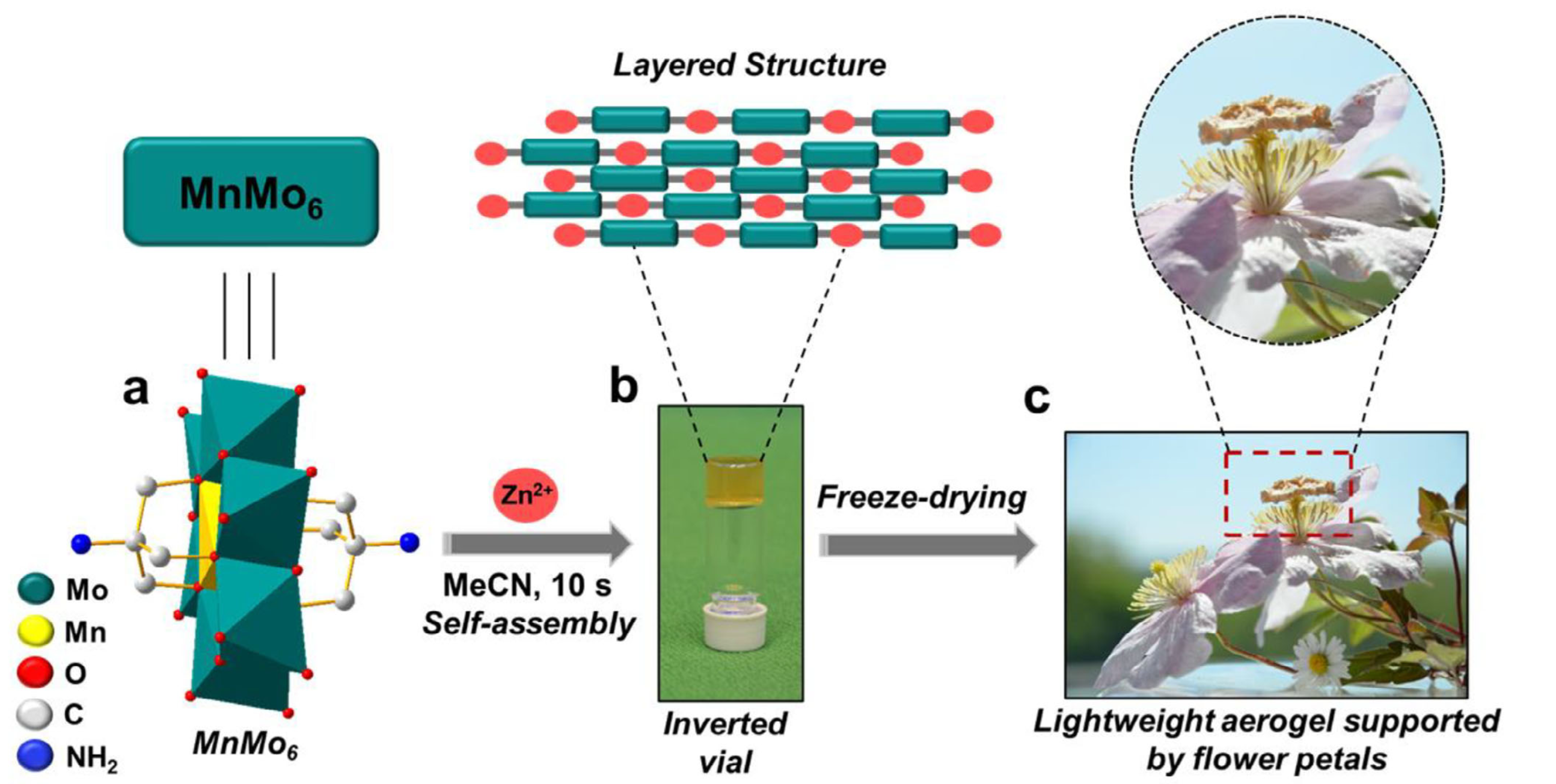
A prototype gel-forming POM is the organofunctionalized Anderson–Evans anion[21] [XMo6O18{RC(CH2O)3}2]3− (X = Mn, Fe, Co; R = –NH2, –CH3, –CH2OH), which carries two organic ligands on opposite sides of the cluster, tethered by tris-alkoxide groups (Fig. 1a). In 2024, Casimiro et al. linked terpyridine-functionalized Anderson anions with Zn(II) or Co(II) cations into supramolecular metallogels showing luminescence, birefringence and spin-crossover behaviour[22]. Until now, however, no pure POM-based metallogel had been converted into an aerogel.
Anderson–Evans POMs are also well-studied oxidation catalysts that can oxidize organic compounds such as thioanisoles and furan-based chemicals[23],[24]. Building on this, researchers from Johannes Gutenberg University Mainz, Ulm University and FSU Jena developed a POM-based organogel that forms within 10 seconds when ZnCl2 reacts with a TRIS-functionalized Anderson POM in acetonitrile, and that can readily be freeze-dried into an aerogel. The team characterized the aerogel in detail, tested it in selective alcohol oxidation with benzyl alcohol, furfuryl alcohol and octanol as model substrates, and explored the roles of the POM, ZnCl2 and the solvent in gel formation.
To make the gel, the researchers combined acetonitrile solutions of ZnCl2 and the TRIS-functionalized Anderson anion (ⁿBu4N)3[MnMo6O18{(OCH2)3CNH2}2][25]. In the vial inversion test[26], in which a gel must stay put when its vial is turned upside down, the gel proved stable and viscoelastic (Fig. 1b). Freeze-drying then turned the organogel into the aerogel, called compound 1 (Fig. 1c).
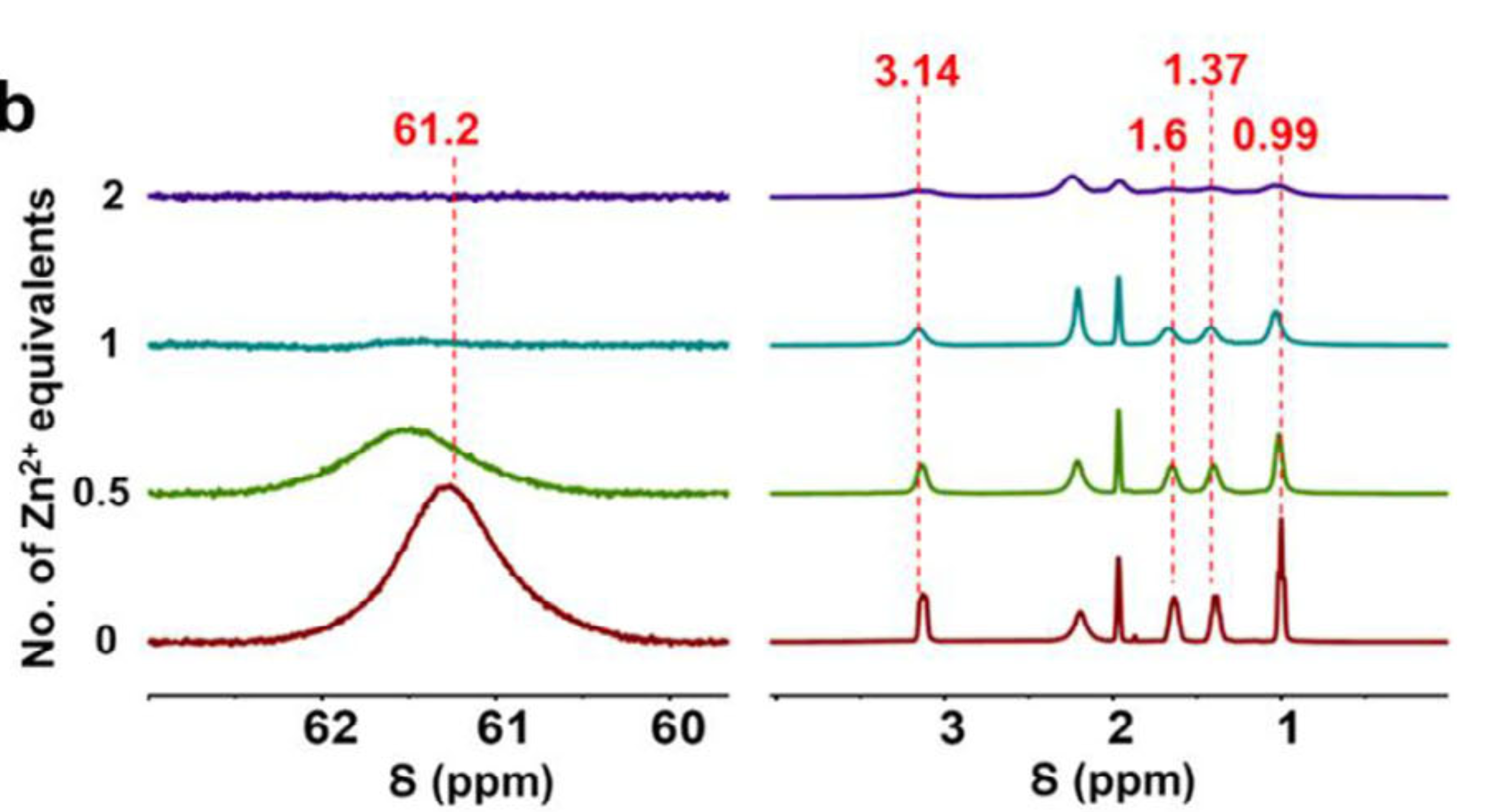
To follow the gelation step by step, the team performed 1H NMR spectroscopic titrations, adding 0 to 2 molar equivalents of ZnCl2 to the MnMo6 solution in deuterated acetonitrile (Fig. 2). The methylene protons of the TRIS-NH2 groups show a strong paramagnetic shift caused by the Mn(III) centre of the Anderson POM[25]. With increasing amounts of ZnCl2, all 1H NMR signals broadened and lost intensity. According to the study, gelation reduces molecular mobility and thereby partially reintroduces anisotropic chemical shifts and dipole–dipole couplings, which affect the spectral lines. Similar line broadening had been reported when Keggin-type POMs triggered hydrogel formation with γ-cyclodextrin[27].
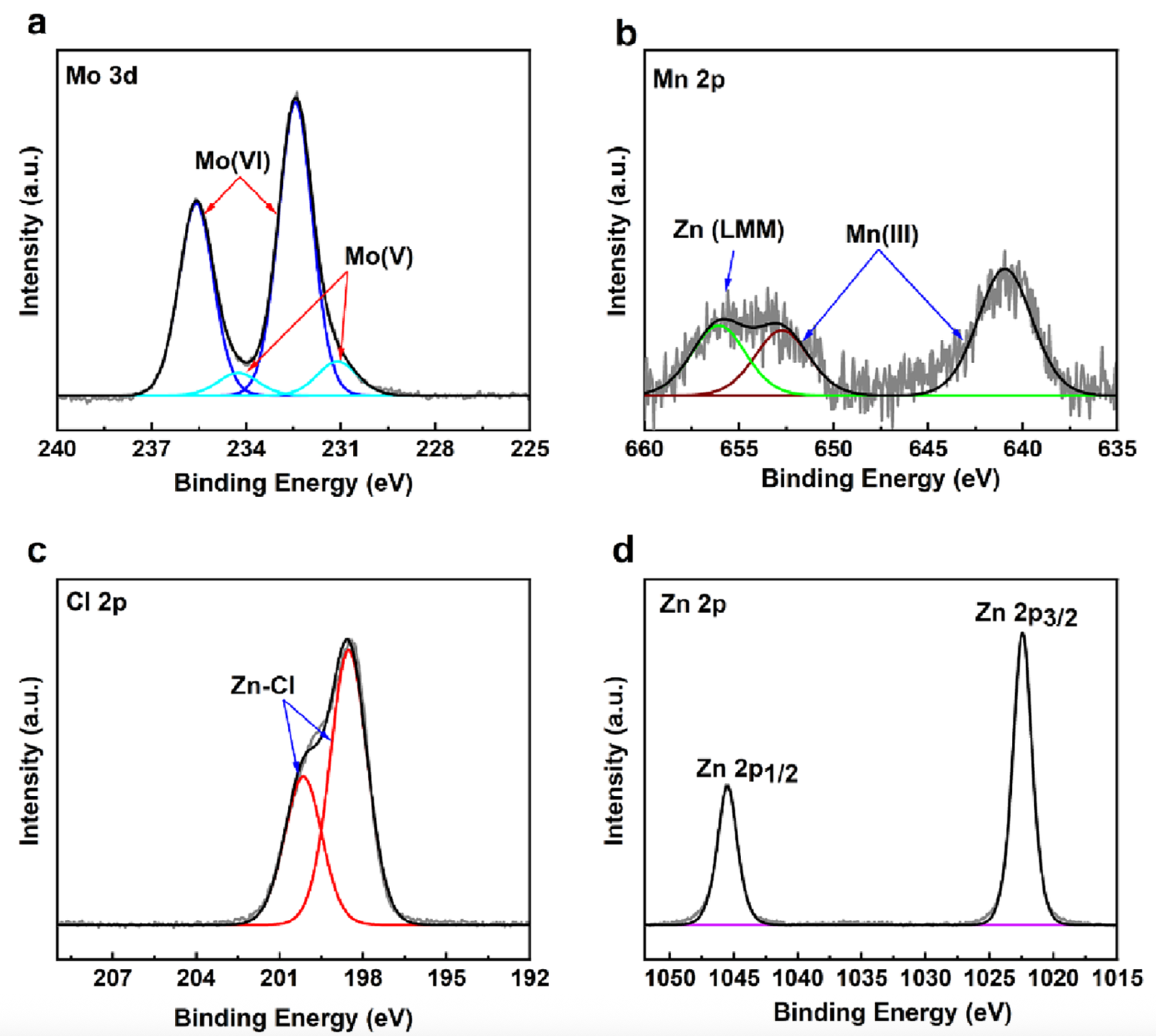
Thermal analysis and X-ray photoelectron spectroscopy then confirmed that the aerogel contains the intact building blocks in their expected oxidation states (Fig. 3; see box).
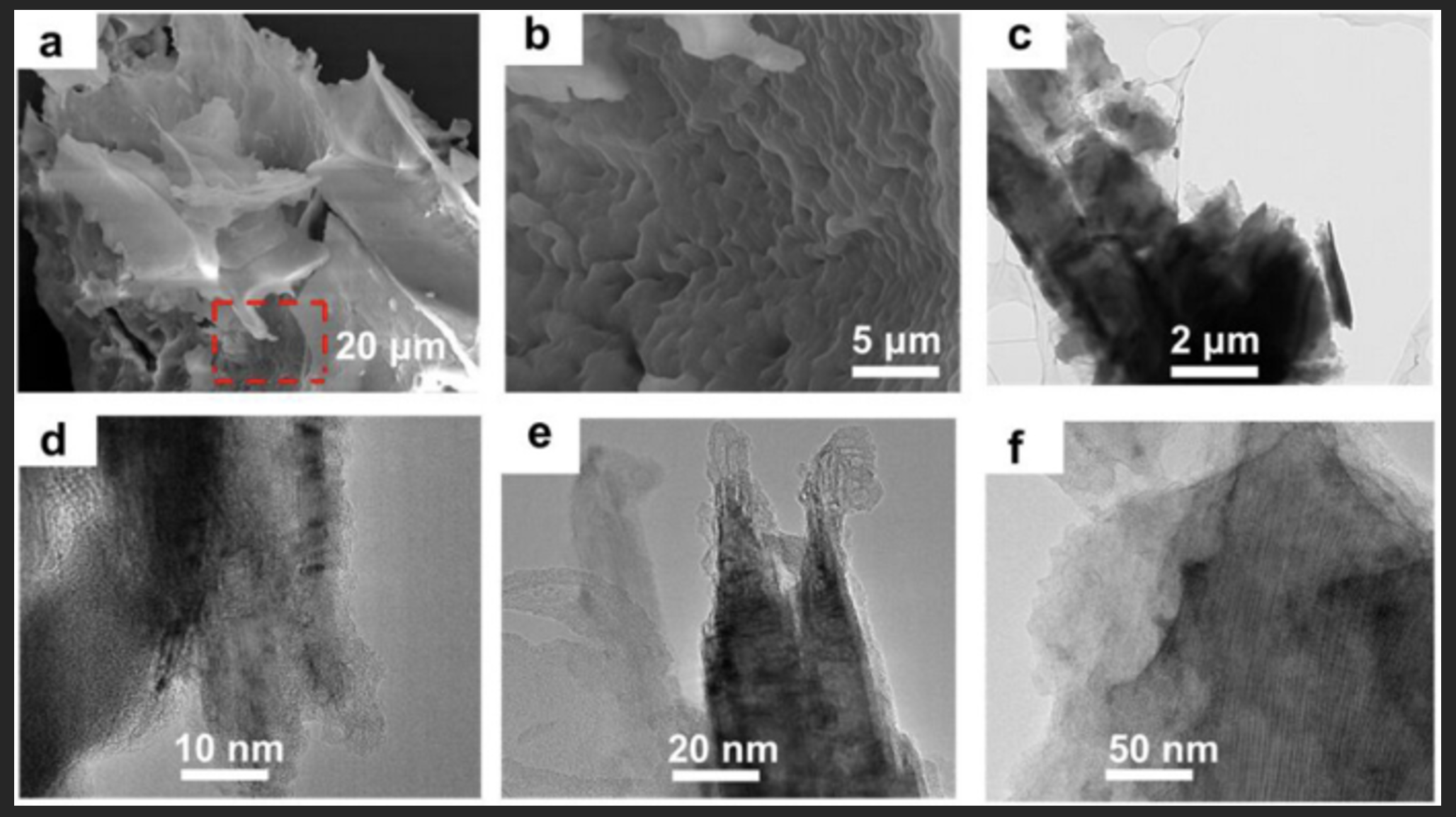
The inner architecture of the aerogel became visible under the electron microscope. Scanning electron microscopy (SEM) showed a layered structure of stacked and agglomerated sheets (Fig. 4a,b). For a closer look, the scientists at Ulm University employed transmission electron microscopy (TEM), high-resolution TEM (HRTEM) and scanning TEM (STEM) combined with energy-dispersive X-ray spectroscopy (EDS). The images show that compound 1 consists of thin, elongated fibrous sheets that appear stacked (Fig. 4c,d). HRTEM (Fig. 4e,f) confirmed both long fibrous and layered structures, which the authors attribute to the supramolecular linkage of the Anderson anions.
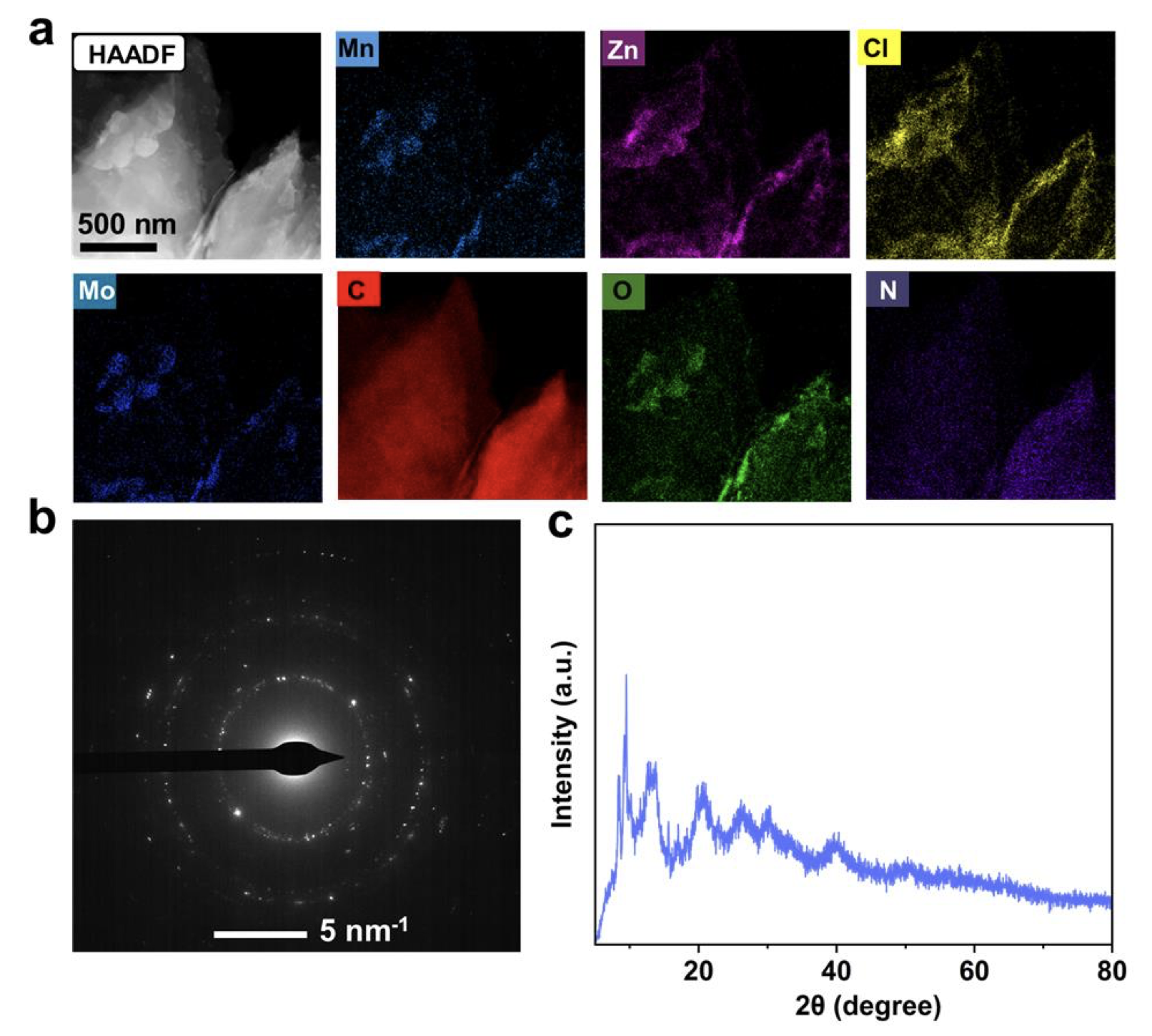
High-angle annular dark-field STEM (HAADF-STEM), in which heavier elements appear brighter, together with EDS elemental mapping verified that C, N, O, Cl, Mn, Zn and Mo are distributed uniformly throughout compound 1 (Fig. 5a). Selected area electron diffraction (SAED) on a local area (Fig. 5b) indicated crystalline order, with a reciprocal spacing of 4.83 nm−1 that agrees well with the 4.40 nm−1 obtained from powder X-ray diffraction (pXRD) (Fig. 5c).

The same uniformity holds on the millimetre scale of the bulk material, as micro-X-ray fluorescence maps showed (Fig. 6; see box).

Finally, the team put the aerogel to work as a catalyst. POMs have been extensively investigated as catalysts for organic oxidation reactions[34]–[36], and Anderson-type POMs in particular have proven highly efficient for alcohol oxidation[37]–[39]. After each reaction, the researchers separated the catalyst by centrifugation and analysed the products by quantitative 1H NMR spectroscopy. With compound 1, the benzaldehyde yield from benzyl alcohol was significantly higher than in the blank sample (Fig. 7a), and furfural and octanal yields likewise rose substantially over time (Fig. 7b). Compound 1 was more active for benzyl alcohol than for furfuryl alcohol or octanol, which the authors relate to the more complex molecular structures of the latter two.
Under the chosen conditions, the aerogel delivered a 30% benzaldehyde yield after 48 hours and outperformed the other catalysts tested, and it could be recovered and reused at least four times without a major loss in activity. The study thus shows a simple route to a new kind of porous catalyst: TRIS-functionalized Anderson polyoxometalates act as low-molecular-weight gelators when cross-linked with ZnCl2 in acetonitrile, and a scalable freeze-drying step turns the gel into an aerogel. The initial insights into the roles of POM anion, metal salt and solvent are meant to guide the development of this new class of POM-based porous catalysts. "The study opens the door to (multi-)functional polyoxometalate-based aerogels for sorption, separation, catalysis, and energy technologies," the authors write.
Resource:
Sachdeva, G., Maloul, S., Zolg, J., Müller, R., Mondeshki, M., Ebrahimi, E., Abid, D., Chala, S. A., Neumann, C., Turchanin, A., Biskupek, J., Kaiser, U., Leopold, K., Streb, C. (2025).
Polyoxometalate Aerogels Formed by Organofunctionalized Anderson Polyoxometalates as Low Molecular Weight Gelators.
Adv. Mater. Interfaces 12(22), e00597.
https://doi.org/10.1002/admi.202500597
 Download this news article as PDF – for reading on paper, taking notes or filing.
-
Christoff-Tempesta, A., et al. (2018), Beyond covalent crosslinks: applications of supramolecular gels. Gels, 4, 40. https://doi.org/10.3390/gels4020040
-
Smith, D. (2024), Supramolecular gels - a panorama of low-molecular-weight gelators from ancient origins to next-generation technologies. Soft Matter, 20, 10. https://doi.org/10.1039/d3sm01301d
-
Sangeetha, N. M., & Maitra, U. (2005), Supramolecular gels: Functions and uses. Chem. Soc. Rev., 34, 821. https://doi.org/10.1039/b417081b
-
Picci, G., et al. (2023), Metal-based gels: Synthesis, properties, and applications. Coord. Chem. Rev., 492, 215225. https://doi.org/10.1016/j.ccr.2023.215225
-
Fortunato, A. & Mba, M. (2021), Metal cation triggered peptide hydrogels and their application in food freshness monitoring and dye adsorption. Gels, 7, 85. https://doi.org/10.3390/gels7030085
-
Steed, J. W. (2010), Anion-tuned supramolecular gels: a natural evolution from urea supramolecular chemistry. Chem. Soc. Rev., 39, 3686. https://doi.org/10.1039/b926219a
-
Zhang, J. & Su, C. Y. (2013), Metal-organic gels: From discrete metallogelators to coordination polymers. Coord. Chem. Rev., 257, 1373. https://doi.org/10.1016/j.ccr.2013.01.005
-
Dhibar, S., et al. (2020), Triethylenetetramine-based semiconducting Fe (III) metallogel: Effective catalyst for Aryl-S coupling. ACS Omega, 5, 2680. https://doi.org/10.1021/acsomega.9b03194
-
Grondin, O. et al. (2010), Multifunctional gels from polymeric spin-crossover metallo-gelators. Langmuir, 26, 5184. https://doi.org/10.1021/la903653d
-
Roy, A. (2024), An innovative semiconducting Ni(II)-metallogel based robust random access memory (RRAM) device for advanced flexible electronics applications. Sci. Rep., 14, 31619. https://doi.org/10.1038/s41598-024-79358-3
-
Dhibar, S. et al. (2023), A transparent self-healable multistimuli-responsive novel supramolecular Co(II)-metallogel derived from adipic acid: Effective hole transport layer for polymer solar cells. J. Mol. Liq., 370, 121020. https://doi.org/10.1016/j.molliq.2022.121020
-
Sonu, S., et al. (2023), Multifunctional aerogels: A comprehensive review on types, synthesis and applications of aerogels. J. Sol-Gel Sci. Technol., 105, 324. https://doi.org/10.1007/s10971-022-06026-1
-
Walker, R. C., et al. (2021), Zirconia aerogels for thermal management: Review of synthesis, processing, and properties information architecture. Adv. Col. Int. Sci., 295, 102464. https://doi.org/10.1016/j.cis.2021.102464
-
Smirnova, I. & Gurikov, P. (2018), Aerogel production: Current status, research directions, and future opportunities. J. Supercrit. Fluids, 134, 228. https://doi.org/10.1016/j.supflu.2017.12.037
-
Ganesamoorthy, R. (2021), Aerogels for water treatment: A review. J. Clean Prod., 329, 129713. https://doi.org/10.1016/j.jclepro.2021.129713
-
Liu, Z., et al. (2023), Recent advances in stimuli-responsive metallogels. Molecules, 28, 2274. https://doi.org/10.3390/molecules28052274
-
Khan, N. R. (2024), Exploring the versatility of aerogels: Broad applications in biomedical engineering, astronautics, energy storage, biosensing, and current progress. Heliyon, 10, 23102. https://doi.org/10.1016/j.heliyon.2023.e23102
-
Scognamiglio, P. L., et al. (2025), Metallogels as supramolecular platforms for biomedical applications: A review. Processes, 13, 3671. https://doi.org/10.3390/pr13113671
-
Liu, Q. & Wang, X. (2020), Polyoxometalate clusters: Sub-nanometer building blocks for construction of advanced materials. Matter, 2, 816. https://doi.org/10.1016/j.matt.2020.01.020
-
Centellas, M. S., et al. (2020), Exploring the self-assembly of dumbbell-shaped polyoxometalate hybrids, from molecular building units to nanostructured soft materials. Chem. Sci., 11, 11072. https://doi.org/10.1039/d0sc03243c
-
Blazevic, A., & Rompel, A. (2016) The Anderson-Evans polyoxometalate: From inorganic building blocks via hybrid organic-inorganic structures to tomorrows 'Bio-POM'. Coord. Chem. Rev., 307, 42. https://doi.org/10.1016/j.ccr.2015.07.001
-
Casimiro, L., et al. (2024), Multifunctional supramolecular gels with strong mechanical properties formed by self-assembly of polyoxometalate-based coordination polymers. JACS Au, 4, 4948. https://doi.org/10.1021/jacsau.4c00981
-
Wang, Y., et al. (2018), Ratio-controlled precursors of Anderson-Evans polyoxometalates: Synthesis, structural transformation, and magnetic and catalytic properties of a series of triol ligand-decorated {M2Mo6} Clusters (M = Cu2+, Co2+, Ni2+, Zn2+). Inorg. Chem., 57, 3731. https://doi.org/10.1021/acs.inorgchem.7b02996
-
Raabe, J. C., et al. (2024), Synthesis and characterization of V substituted Anderson-type telluromolybdates and tungstates for catalytic oxidation of furan derivatives to formic and maleic acid. Catal. Today, 441, 114899. https://doi.org/10.1016/j.cattod.2024.114899
-
Marcoux, P. B., et al. (2003), Developing remote metal binding sites in heteropolymolybdates. Eur. J. Inorg. Chem., 2003, 2406. https://doi.org/10.1002/ejic.200200677
-
Raghavan, S. R., & Cipriano, B. H. (2005), Gel formation: Phase diagrams using tabletop rheology and calorimetry. Springer, Dordrecht (Eds.: R.G. Weiss, P. Terech), pp. 241-252. https://doi.org/10.1007/1-4020-3689-2_9
-
Khlifi, S., et al. (2024), Switchable redox and thermo-responsive supramolecular polymers based on cyclodextrin-polyoxometalate tandem. Chem. - Eur. J., 30, 202303815. https://doi.org/10.1002/chem.202303815
-
Mahvash, S. et al. (2023), Anderson-type manganese polyoxomolybdate hybrid nanocomposite for boosting drug delivery against breast cancer. J. Drug Deliv. Sci. Technol., 87, 104778. https://doi.org/10.1016/j.jddst.2023.104778
-
Jones, F. (2013), Thermal stability of zinc compounds. Energy and Fuels, 27, 5663. https://doi.org/10.1021/ef400505u
-
Tancredi, N., et al. (2017), Thermal studies of wood impregnated with ZnCl2. Eur. J. Wood & Wood Prod., 75, 633. https://doi.org/10.1007/s00107-016-1113-3
-
Peng, C. (2020), Anderson-type polyoxometalate-based hybrid with high flame retardant efficiency for the preparation of multifunctional epoxy resin nanocomposites. Compos. B Eng., 186, 107780. https://doi.org/10.1016/j.compositesb.2020.107780
-
Hoang, D., et al. (2023), Vanillin: An effective additive to improve the longevity of Zn metal anode in a 30 m ZnCl2 electrolyte. Adv. Energy Mater., 13, 1. https://doi.org/10.1002/aenm.202301712
-
Schmidt, S., et al. (2013), Preparation and characterization of neat and ZnCl2 modified zeolites and alumina for methyl chloride synthesis. Appl. Catal. A Gen., 468, 120. https://doi.org/10.1016/j.apcata.2013.08.039
-
Hill, C. L., et al. (1995), Homogeneous catalysis by transition metal oxygen anion clusters. Coord. Chem. Rev., 143, 407. https://doi.org/10.1016/0010-8545(95)01141-b
-
Wei, Z., et al. (2022), Recent advances of Anderson-type polyoxometalates as catalysts largely for oxidative transformations of organic molecules. Molecules, 27, 5212. https://doi.org/10.3390/molecules27165212
-
Barats, D., & Neumann, R. (2010), Aerobic oxidation of primary aliphatic alcohols to aldehydes catalyzed by a palladium (II) polyoxometalate catalyst. Adv. Synth. Catal., 352, 293. https://doi.org/10.1002/adsc.200900663
-
Khenkin, A. M., et al. (2003), Preparation and characterization of new ruthenium and osmium containing polyoxometalates, [M(DMSO)3Mo7O24]4- (M = Ru(II), Os(II)), and their use as catalysts for the aerobic oxidation of alcohols. Inorg. Chem., 42, 3331. https://doi.org/10.1021/ic026003p
-
Zhang, M., et al. (2018), Highly practical and efficient preparation of aldehydes and ketones from aerobic oxidation of alcohols with an inorganic-ligand supported iodine catalyst. Chem. Commun., 54, 10164. https://doi.org/10.1039/c8cc03722a
-
Wei, Z., et al. (2019), Highly efficient and practical aerobic oxidation of alcohols by inorganic-ligand supported copper catalysis. Green Chem., 21, 4069. https://doi.org/10.1039/c9gc01248f